
Bike Size Guide – Find the Right Bike Size
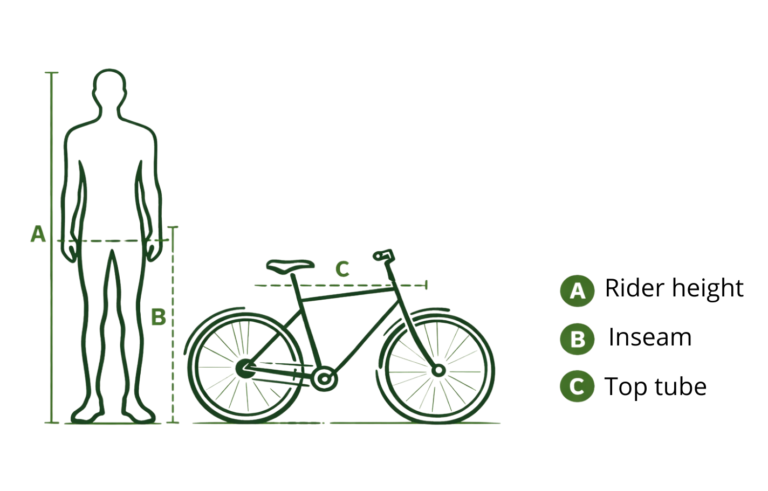
Choosing the correct bike size is essential for comfort, control, and safety.
A properly sized bike improves riding efficiency and reduces the risk of discomfort or injury.
Step 1: Measure Your Body
You only need two measurements to get a reliable starting point.
Rider Height
Measure your full body height while standing barefoot against a wall.
Inseam (Inner Leg Length)
Stand barefoot with your feet about 10–15 cm apart. Place a book firmly against your crotch (as if sitting on a saddle) and measure from the floor to the top of the book.
Tip: Measure 2–3 times and use the average for best accuracy.
Step 2: Understand the Measurements in the Guide
Step 2: Understand the Measurements in the Guide
- A – Rider Height
Your total body height. - B – Inseam
The distance from the floor to your crotch. - C – Top Tube
The horizontal distance between the seat tube and the head tube of the bike frame.
These measurements help determine the correct frame size and ensure adequate standover clearance.
Step 3: Use the Size Chart as a Starting Point
The size chart provides recommended frame sizes based on rider height and standover height.
Always treat the chart as a guideline, not an absolute rule.
If you are between two sizes:
- Choose the smaller size for a more sporty and agile riding position.
- Choose the larger size for a more relaxed and upright ride.
Important Notes
- Bike geometry can vary between brands and models.
- Frame reach, stack, and riding style also affect fit.
- When in doubt, we recommend consulting a professional bike fitter or contacting customer support.
Road Bike Size Guide
Road bikes are designed for efficiency and speed, so correct sizing is critical.
Choose your size primarily based on rider height and inseam.
If you are between two sizes:
- Choose the smaller size for a more aggressive, race-oriented position.
- Choose the larger size for improved comfort on long rides.
Road bikes are typically sized in centimeters (cm).
Gravel Bike Size Guide
Gravel bikes balance stability, comfort, and performance across mixed terrain.
Use your road bike size as a starting point, then consider riding style:
- Smaller size → more control and agility on technical terrain.
- Larger size → more stability and comfort for long-distance riding and bikepacking.
Geometry can vary significantly between brands — always check the size chart.
Mountain Bike (MTB) Size Guide
Mountain bikes are designed for control and maneuverability on rough terrain.
Sizing is based on rider height, and frames are often labeled S / M / L / XL rather than centimeters.
A proper MTB fit should allow:
- Comfortable reach while standing and seated
- Adequate standover clearance when standing over the frame
If in doubt, choose the smaller size for better handling on technical trails.
Hybrid Bike Size Guide
Hybrid bikes are built for versatility and everyday riding.
Choose your size based on rider height and inseam.
Hybrid bikes generally offer a more upright riding position, prioritizing comfort and ease of use.
If you are between sizes:
- Smaller size → easier handling
- Larger size → more relaxed posture
City / E-Bike Size Guide
City bikes and e-bikes focus on comfort, stability, and accessibility.
Sizing is based mainly on rider height, and many models feature:
- Step-through or low-entry frames
- Adjustable stems and seatposts for fine tuning
If you are between sizes, we usually recommend the smaller size for easier mounting and control.
Kids Bike Size Guide
Kids’ bikes are sized by wheel size, not frame size.
The correct size allows the child to:
- Place both feet flat on the ground
- Control the bike safely and confidently
Do not size up for growth — a properly sized bike helps children learn faster and ride more safely.